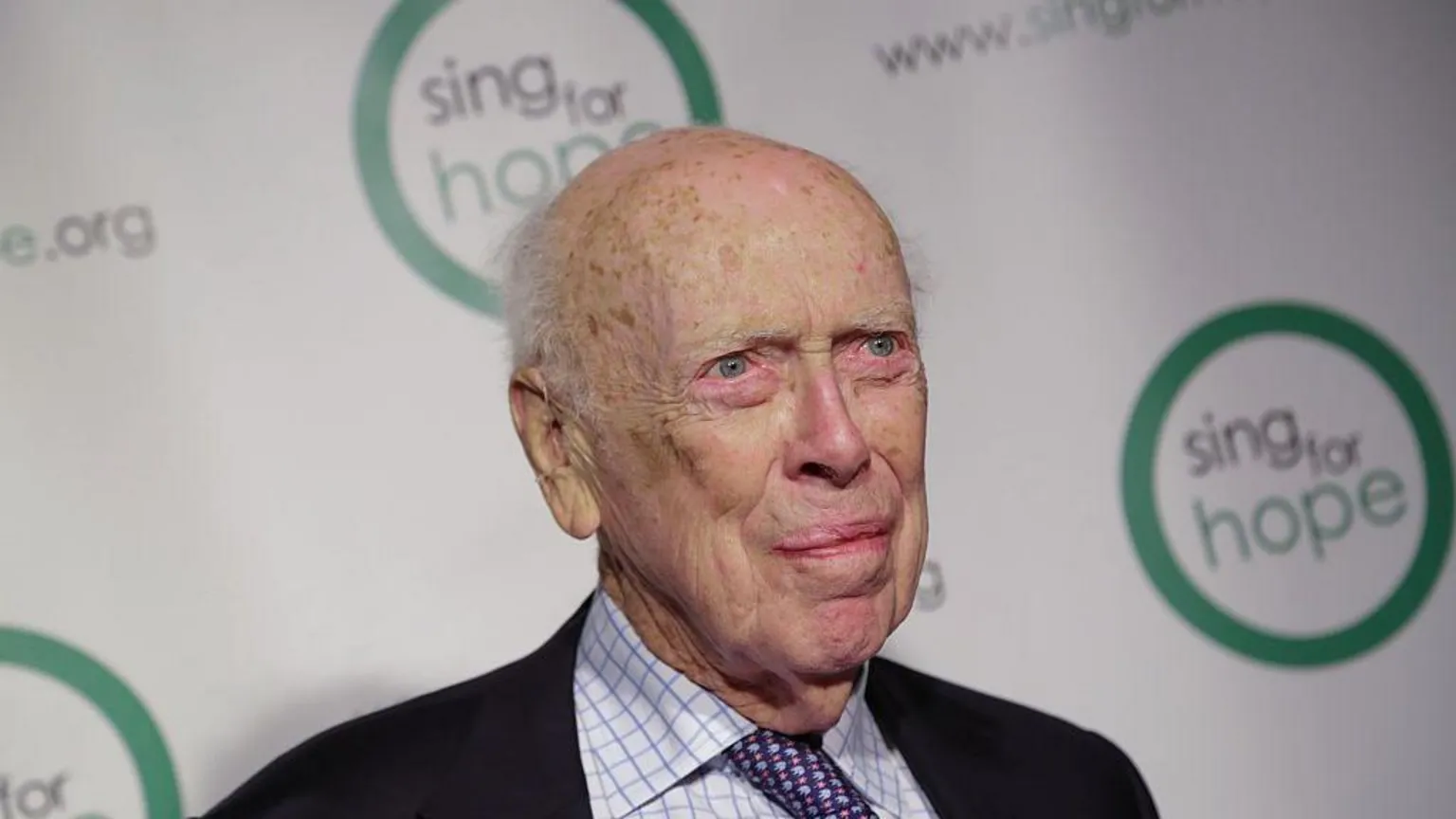
James Watson, the American scientist whose work unlocked the structure of DNA, has died at the age of 97.
Celebrated for helping reveal the blueprint of life, Watson’s research alongside Francis Crick set the stage for major advances in genetics and molecular biology. Cold Spring Harbor Laboratory, where he spent much of his career leading research, confirmed his death.
In 1953, Watson and Crick identified the double-helix structure of DNA, building on experimental data from researchers including Rosalind Franklin and Maurice Wilkins. Their discovery revolutionized biology and medicine and earned them the Nobel Prize in 1962.
Reflecting on the moment, the team once said, “We have discovered the secret of life.”
Watson’s career, however, was overshadowed by controversial statements on race and intelligence. In a 2007 interview with the Times, he said: “all our social policies are based on the fact that their intelligence is the same as ours - whereas all the testing says not really.”
Later remarks in 2019 again raised questions about a link between race and IQ, leading Cold Spring Harbor Laboratory to remove his honorary titles of chancellor emeritus, Oliver R Grace professor emeritus, and honorary trustee.
The lab described his views as “reprehensible, unsupported by science.”
Born in Chicago in April 1928, Watson showed early academic promise and earned a scholarship to the University of Chicago at just 15. He became interested in X-ray diffraction, a technique that allowed scientists to study the inner structures of molecules.
His research ambitions led him to Cambridge, where he met Crick and began building models to decipher DNA’s structure.
After his groundbreaking work, Watson moved to Harvard with his wife, Elizabeth, serving as a professor of biology.
The couple had two sons, one of whom lived with schizophrenia. In 1968, Watson assumed leadership of Cold Spring Harbor Laboratory in New York, transforming it into a world-class center for genetic research and innovation.
Watson’s life reflected both scientific brilliance and controversy.
In 2014, he auctioned his Nobel medal for $4.8 million, citing his estrangement from parts of the scientific community, though a Russian billionaire later returned it to him. Despite debates surrounding his views, his role in uncovering DNA’s structure remains a cornerstone of modern biology, influencing research and medical breakthroughs around the world.































Comments
Sign in with Google to comment, reply, and like comments.
Continue with Google